Calculate your body fat percentage to enhance your wellness! Discover how to assess it, what it means for your health, and tips for fitness success.
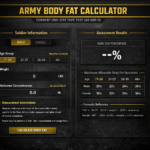
Body Fat Calculator
Your Results
Body Fat Mass
Lean Body Mass
BMI
Ideal Body Fat
Table of Contents
Understanding body fat percentage is crucial for overall wellness and fitness. Learn what body fat percentage is how to calculate it using the U.S. Navy method, and what your results mean for your health. Discover the importance of maintaining a healthy body fat percentage and how it can guide you in achieving your fitness goals. Whether you're aiming for a specific range or looking to improve your body composition, this guide provides valuable insights into assessing your body fat and understanding your lean mass.
What Is Body Fat Percentage?
Body fat percentage is a vital metric that indicates how much of your body is comprised of fat. Knowing your body fat percentage can help you understand your overall fitness level and can guide you in setting health goals, For most individuals, it's important to maintain a body fat percentage within a healthy range to ensure overall wellness.
How to Calculate Your Body Fat Percentage
You can calculate your body fat percentage using various methods, but one of the most accessible is the U.S. Navy method. This benchmark analysis utilizes your gender, age, weight, height, neck, and waist measurements, Measurements can be taken in either U.S. units (pounds and inches) or metric units (kilograms and centimeters). With these parameters inputted, you can determine your body fat percentage effectively.
Understanding the Results
Your calculated body fat percentage provides significant insight into your body composition. For instance, a body fat percentage of 15.3% typically indicates a fit individual, while values around 25% categorize someone as obese. It's crucial to aim for a range that aligns with your fitness goals; for example, athletes generally may target a body fat percentage of around 6% to 11%. Additionally understanding your lean body mass—such as if you have 23.2 lbs of fat mass—can offer guidance on the fat you may need to lose to reach your ideal body fat percentage.
Body Fat Calculator
You can utilize the Body Fat Calculator to gauge your overall body fat percentage by inputting certain measurements. If you prefer using the metric system, simply click on the "Metric Units" tab. For optimal accuracy, ensure your measurements are taken to the nearest quarter inch (0.5 cm). This estimation employs the U.S. Navy approach, in addition to incorporating the BMI method for calculating body fat percentage, both of which are detailed in this calculator.,
Body fat percentage
Body fat percentage is a key indicator of health, representing the proportion of fat your body holds compared to your total body weight. It includes both essential fat, which is necessary for bodily functions, and storage fat.
Why is Body Fat Percentage Important?
Health Risk Assessment: High body fat can increase the risk of chronic diseases like heart disease, diabetes, and certain cancers.
Fitness Progress: It's a more accurate measure of fitness than weight alone, as it differentiates between fat and muscle mass.
Body Composition: Understanding your body fat helps you tailor your diet and exercise to achieve a healthier body composition.
The U.S. Navy Body Fat Calculation Method
The U.S. Navy method is a simple and widely used way to estimate body fat percentage using basic body measurements. While not as precise as clinical methods like DEXA scans, it provides a good estimate you can do at home.
What You'll Need:
Measuring tape
Calculator
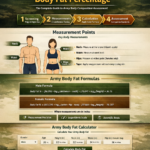
Measurements Required:
Men: Neck circumference, waist circumference, height.
Women: Neck circumference, waist circumference, hip circumference, height.
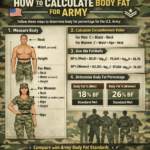
Steps for Men:
Measure Neck: Measure around your neck just below the larynx, keeping the tape horizontal.
Measure Waist: Measure your waist at the navel (belly button), ensuring you're relaxed and not holding your breath.
Measure Height: Stand tall and measure your height.
Formula for Men:
Body Fat % = 495 / (1.0324 - 0.19077 * log10(waist - neck) + 0.15456 * log10(height)) - 450
Steps for Women:
Measure Neck: Measure around your neck just below the larynx, keeping the tape horizontal.
Measure Waist: Measure your waist at the smallest point, usually above the navel.
Measure Hips: Measure around the widest part of your hips.
Measure Height: Stand tall and measure your height.
Formula for Women:
Body Fat % = 495 / (1.29579 - 0.35004 * log10(waist + hip - neck) + 0.22100 * log10(height)) - 450
Example Calculation (for a hypothetical man):
Waist: 34 inches
Neck: 15 inches
Height: 70 inches
Body Fat % = 495 / (1.0324 - 0.19077 * log10(34 - 15) + 0.15456 * log10(70)) - 450
Body Fat % = 495 / (1.0324 - 0.19077 * log10(19) + 0.15456 * log10(70)) - 450
Body Fat % = 495 / (1.0324 - 0.19077 * 1.27875 + 0.15456 * 1.84510) - 450
Body Fat % = 495 / (1.0324 - 0.24395 + 0.28522) - 450
Body Fat % = 495 / 1.07367 - 450
Body Fat % = 461.02 - 450
Body Fat % = 11.02%
So, for this hypothetical man, the body fat percentage is approximately 11.02%.
What Your Results Mean
Body fat percentage ranges vary based on age, sex, and fitness goals. Here's a general guideline:
Classification Women (% Fat) Men (% Fat)
Essential Fat 10-13% 2-5%
Athletes 14-20% 6-13%
Fitness 21-24% 14-17%
Average 25-31% 18-24%
Obese 32%+ 25%+
Essential Fat: The minimum amount of fat required for basic physiological functions. Going below this can be detrimental to health.
Athletes: Individuals who train rigorously and often have very low body fat for performance.
Fitness: A healthy and achievable range for most active individuals.
Average: The typical range for healthy adults.
Obese: Indicates a higher risk of health problems.
Important Considerations:
Individual Variation: These ranges are general. Consult with a healthcare professional or a certified fitness expert for personalized advice.
Consistency: When tracking progress, use the same measurement method and take measurements at the same time of day.
Focus on Health: The goal is to achieve a healthy body fat percentage, not necessarily the lowest.
Maintaining a healthy body fat percentage is a marathon, not a sprint. It involves a balanced diet, regular exercise, and a consistent healthy lifestyle. Understanding your body fat percentage empowers you to make informed decisions about your health and fitness journey.
Here's an illustrative image of someone measuring their waist, a common step in calculating body fat percentage: