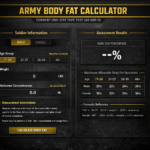
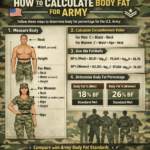
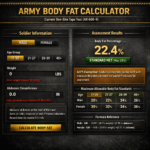
This 100% free body fat calculator estimates body fat percentage based on the U.S. Navy Method and the BMI method. It gives the loss needed to reach the ideal body
U.S. Navy Body Fat Calculator
Calculate your body fat percentage using the official U.S. Navy method
Your Measurements
Measure at the navel level (men) or narrowest point (women)
Measure at the widest part of the hips
Your Results
About the Navy Body Fat Method
Measurement Guide
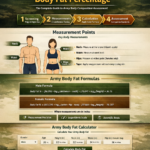
For accurate results, follow these measurement guidelines:
- Height: Stand straight without shoes
- Weight: Measure in the morning before eating
- Neck: Measure below the larynx with tape sloping downward
- Waist: Men – at the navel; Women – at the narrowest point
- Hips: Women only – at the maximum extension of the buttocks
Calculation Method
The U.S. Navy body fat formula is widely used for its accuracy and simplicity:
Men:
86.010 × log10(waist – neck) – 70.041 × log10(height) + 36.76
Women:
163.205 × log10(waist + hip – neck) – 97.684 × log10(height) – 78.387
Body Fat Categories
Body fat percentage categories based on U.S. Navy standards:
- Essential fat: Men 2-5%, Women 10-13%
- Athletes: Men 6-13%, Women 14-20%
- Fitness: Men 14-17%, Women 21-24%
- Average: Men 18-24%, Women 25-31%
- Obese: Men 25%+, Women 32%+
Table of Contents

The U.S. Navy Body Fat Calculator is an essential tool for estimating body fat percentage, crucial for military readiness and overall health. This guide explains its significance, how it works, required measurements, and the benefits of knowing your body fat percentage. Learn about the categories of body fat, how they relate to fitness, and tips for achieving healthy levels. Understand the tool’s limitations and real-life applications through user feedback. Gain insights into incorporating this knowledge into your fitness journey for improved health outcomes.
Introduction to the U.S. Navy Body Fat Calculator
The U.S. Navy Body Fat Calculator serves as an essential tool for estimating an individual’s body fat percentage, which is crucial for meeting military standards and overall fitness benchmarks. This calculator is designed to provide a reliable assessment of body composition, playing a significant role in the evaluation of personnel for military readiness. Understanding body fat levels is paramount, as it can impact performance, health, and eligibility within the armed forces. This calculator is particularly valuable in settings where weight or body composition standards are strictly enforced.
The primary purpose of the U.S. Navy Body Fat Calculator is to offer accurate measurements that can aid in determining whether individuals meet the required body fat standards set by the Navy. Military personnel are often required to maintain a reasonable level of fitness, which directly correlates to their operational effectiveness. The calculator uses variables such as height, neck and waist circumference to provide an estimate of body fat percentage without relying solely on body weight, which does not account for muscle mass or distribution of fat. This multifaceted approach allows for a more comprehensive understanding of an individual’s body composition.
How the Body Fat Calculation Works
The U.S. Navy utilizes specific formulas to determine body fat percentage, which is essential for assessing the physical readiness of service members. These calculations vary between male and female personnel due to differences in body composition. The body fat percentage is calculated based on key measurements: waist circumference, neck circumference, height, and for women, hip circumference as well.
For men, the formula to calculate body fat percentage is as follows:
Body Fat % = 86.010 x log10(Waist – Neck) – 70.041 x log10(Height) + 36.76
In this equation, the measurements are taken in inches, where waist and neck are measured at their respective circumferences. The height is also marked in inches. The logarithmic functions incorporated into the formula account for variations in body shape and composition among different individuals.
For women, the calculation is slightly different due to the inclusion of hip circumference. The formula is represented as:
Body Fat % = 163.205 x log10(Waist + Hip – Neck) – 97.684 x log10(Height) – 78.387
As with the male formula, measurements should be in inches. The inclusion of hip circumference alongside waist and neck measurements is necessary, as it adds accuracy to the body fat estimation for women, acknowledging their different anatomical structures.
To produce accurate results, each measurement must be taken under consistent conditions, preferably using a measuring tape for precision. The body fat percentage derived from these formulas provides valuable insights into an individual’s fitness level and overall health, serving as a tool for both personnel and health officials within the Navy.
Required Measurements for Accurate Results
To achieve reliable outcomes when utilizing the U.S. Navy Body Fat Calculator, it is essential to gather specific measurements accurately. The primary metrics required include height, weight, neck, waist, and hip circumference. Each of these measurements plays a critical role in determining body fat percentage, and adhering to proper techniques is imperative for precise results.
Starting with height, it is best measured in inches. Stand against a wall with a flat surface, ensuring that your heels, back, and head are touching the wall. Use a level to mark the height on the wall, and measure from the floor to the mark for accuracy. Weight should be taken using a reliable scale. It is advisable to weigh oneself at the same time each day for consistency, preferably in the morning after waking.
Next, measuring neck circumference requires a flexible measuring tape. Position the tape just below the larynx (Adam’s apple) and wrap it around the neck, ensuring it is parallel to the floor, and snug but not tight. For waist measurement, locate the narrowest part of the torso, typically above the belly button. Wrap the tape around this area, again ensuring it is level and snug without compressing the skin.
If the individual is female, hip circumference also plays a role. To measure this, find the fullest part of the hips and wrap the tape around, ensuring it is parallel to the ground. All measurements should be taken without clothing as it might add unnecessary inches. To avoid any discrepancies, it is advisable to record measurements at least twice and use the average for the most accurate calculation. Accurately obtaining these measurements will ensure that the results calculated through the U.S. Navy Body Fat Calculator reflect a true representation of body fat percentage.
Body Fat Percentage Categories
The U.S. Navy Body Fat Calculator utilizes specific body fat percentage categories to determine an individual’s fitness level, which are critical for both physical assessments and military standards. These categories are divided into five primary ranges: essential fat, athletes, fitness, average, and obese. Each range has defined implications that contribute to overall health and performance evaluation for both men and women.
Essential fat is crucial for maintaining basic physiological functions and accounts for approximately 2-5% of body weight in men and 10-13% in women. This category is fundamental as it supports critical bodily functions, including hormone production and insulation. Body fat below these levels can lead to serious health disturbances.
The athlete category typically includes individuals involved in high levels of physical training or competing in sports. For men, the body fat percentage range in this category is approximately 6-13%, while for women, it ranges from 14-20%. This level is indicative of a lean physique and optimal fitness, which often correlates with enhanced performance in athletic activities.
Moving to the fitness category, which generally includes individuals who engage in regular physical activity without competing in sports, men typically fall within the 14-17% range, whereas women often fall within the 21-24% range. This group values health and fitness but does not rigorously pursue athletic competition.
The average category, which encompasses most of the population, includes men with a body fat percentage range of 18-24% and women ranging from 25-31%. This level reflects a balanced lifestyle but may indicate room for improvement regarding physical fitness and health.
Lastly, the obese category is characterized by a body fat percentage above 25% for men and 32% for women. This classification highlights possible health risks associated with elevated body fat, such as cardiovascular disease and diabetes. Understanding these categories is essential as they provide a framework for evaluating and improving individual fitness and health goals.
Benefits of Knowing Your Body Fat Percentage
Understanding your body fat percentage is pivotal for numerous reasons that extend beyond mere aesthetics. For fitness enthusiasts and professionals alike, tracking body fat can serve as a crucial metric in assessing overall health and wellness. By providing insights into fat distribution, body composition, and energy reserves, body fat percentage becomes a foundational element in any fitness regimen.
From a health assessment perspective, knowing your body fat percentage allows individuals to evaluate their risk factors for various health-related issues. High levels of body fat are often associated with increased risks of chronic conditions such as cardiovascular disease, diabetes, and certain cancers. Conversely, extremely low body fat levels can also pose health risks, including hormonal imbalances and weakened immune responses. Therefore, understanding where one stands in terms of body fat can serve as an early warning system for potential health problems.
Weight management is another area significantly impacted by knowledge of body fat percentage. While many people focus solely on weight as a health indicator, body fat percentage provides a more nuanced view of one’s physical state. For those looking to lose weight, understanding body fat can help set realistic and healthy goals. It discourages extreme dieting and encourages a well-rounded approach that includes exercise and nutrition. Knowing your body fat percentage contributes to making informed decisions regarding dietary changes and exercise programs aimed at improving body composition rather than just focusing on the scale.
Moreover, in the context of athletic performance, body fat percentage can be crucial for optimizing efficiency and functionality. Different sports require varying levels of body fat for peak performance. Athletes who can balance their body fat in relation to their sport are better positioned to improve endurance, speed, and agility. Overall, comprehending your body fat percentage facilitates informed decision-making for lifelong health, fitness, and well-being.
Limitations of the U.S. Navy Body Fat Calculator
The U.S. Navy Body Fat Calculator is a widely used tool for estimating body fat percentage based on specific physical measurements. However, it is crucial to understand the limitations associated with this calculator. Firstly, while the results it provides can give a general idea of body fat levels, they do not offer a comprehensive analysis of an individual’s overall health or fitness. The calculations are based on a formula that requires measurements such as neck circumference, waist circumference, and height, which may not account for all factors influencing body composition.
Moreover, this calculator is primarily designed for individuals who fit into certain demographic categories. It may not be applicable to everyone, particularly those who are pregnant, elderly, or athletes with a high muscle mass. For instance, athletes often possess a higher amount of muscle relative to fat, which can lead to misleading body fat estimates. The U.S. Navy Body Fat Calculator does not distinguish between fat and muscle tissue, which could result in an inflated perception of body fat for highly muscular individuals.
Another significant limitation is that the formula used in the calculator does not incorporate variations in body shape, distribution of fat, or ethnic differences in body composition. Consequently, the estimates may not reflect the specific needs or conditions of every user. Due to these variations, it is vital for individuals to consult with healthcare professionals to obtain a more accurate assessment of body fat percentage and overall health. A trained professional can take into account personal medical history, lifestyle factors, and can even provide guidance for achieving health and fitness goals more effectively.
Tips for Achieving Healthy Body Fat Levels
Maintaining a healthy body fat percentage is essential for overall wellness and optimal physical performance. To successfully reach your body fat goals, consider implementing a combination of nutritional strategies, exercise routines, and lifestyle adjustments.
Nutrition plays a crucial role in body composition. Begin by prioritizing a balanced diet, rich in whole foods such as fruits, vegetables, lean proteins, and whole grains. It is advisable to minimize the intake of processed foods, added sugars, and unhealthy fats. Monitoring portion sizes can also be impactful; keeping food portions in check can prevent overeating and aid in adrenal health. Additionally, staying hydrated by drinking adequate water throughout the day supports metabolism and helps control hunger.
In conjunction with a nutritious diet, incorporating regular physical activity is essential. Aim for a mix of cardiovascular exercises, such as swimming, running, or cycling, alongside strength training activities. Cardio workouts can help burn calories and improve cardiovascular health, while resistance training builds muscle mass, which can enhance metabolism. Most health guidelines suggest aiming for at least 150 minutes of moderate-intensity aerobic activity per week, combined with two days of strength training.
Besides nutrition and exercise, focusing on holistic wellness can have a significant impact on maintaining healthy body fat levels. Prioritize sufficient sleep and stress management, as both sleep deprivation and elevated stress levels can lead to hormonal imbalances that may affect body fat accumulation. Techniques such as mindfulness, yoga, or meditation can offer stress relief and improve mental well-being.
By adopting these actionable practices, you can not only work towards achieving a healthy body fat percentage but also foster a sustainable lifestyle that promotes overall health and wellness.
User Feedback and Real-Life Applications
The U.S. Navy Body Fat Calculator has gained a reputation for its practical application among both military personnel and civilians aiming to manage their body composition. User testimonials frequently highlight the calculator’s accuracy and ease of use, making it a valuable tool for various fitness and health journeys. For instance, Navy recruits often use the calculator as part of their preparation for physical fitness assessments. One user, a recent recruit, shared how it helped them understand their body fat percentage and allowed for targeted training that focused on meeting Navy standards. This not only boosted their physical readiness but also increased their confidence during evaluations.
Civilians are not left out of the benefits this tool provides. Fitness enthusiasts often incorporate the U.S. Navy Body Fat Calculator into their workout regimes. A personal trainer reported using the calculator to guide clients towards more effective training plans. By measuring body fat percentage regularly, clients could adjust their diets and exercise routines based on real data, rather than relying solely on weight metrics. This strategic approach has led to more successful health transformations and fostered a deeper understanding of healthy living principles among clients.
Health journeys characterized by significant changes have also been documented through the lens of the calculator. One individual recounted how their initial assessment revealed a higher body fat percentage than expected, igniting a desire for change. Through consistent use of the U.S. Navy Body Fat Calculator and a commitment to fitness goals, they successfully reduced their body fat, marking a substantial improvement in health and lifestyle. These accounts demonstrate how the calculator not only supports fitness and military preparations but also serves as a motivational tool, guiding users toward achieving their personal health objectives.
Conclusion: Empowering Yourself with Body Composition Knowledge
In summarizing the importance of the U.S. Navy Body Fat Calculator, it becomes clear that understanding body composition is integral to achieving health and fitness goals. This tool not only provides a standardized method for assessing body fat percentage but also serves as a valuable resource for individuals who wish to monitor their physical condition. By understanding how to utilize this calculator effectively, individuals can gain insight into their body composition, enabling informed decisions regarding their health.
The significance of body composition extends beyond mere aesthetics; it has profound implications for overall health, physical performance, and longevity. Armed with the knowledge that the U.S. Navy Body Fat Calculator imparts, individuals can establish realistic health and fitness objectives tailored to their unique circumstances. Tracking body fat percentage can illuminate trends over time, fostering a greater understanding of how lifestyle changes impact one’s body. This highlights the necessity for consistent engagement with one’s body composition throughout different life stages.
Furthermore, empowering oneself with accurate body composition knowledge enables a proactive approach to fitness. It encourages accountability in exercise and dietary choices, reinforcing the idea that informed decisions lead to better outcomes. Readers are encouraged to leverage the tools and techniques discussed, becoming active participants in their health journey rather than passive observers.
In conclusion, the U.S. Navy Body Fat Calculator represents a powerful ally in the quest for personal health and fitness. By staying informed and utilizing available resources, individuals can take control of their body composition and health, promoting a lifetime of well-being. As you embark on this journey, remember that knowledge is a crucial component for success in the realm of fitness and health.